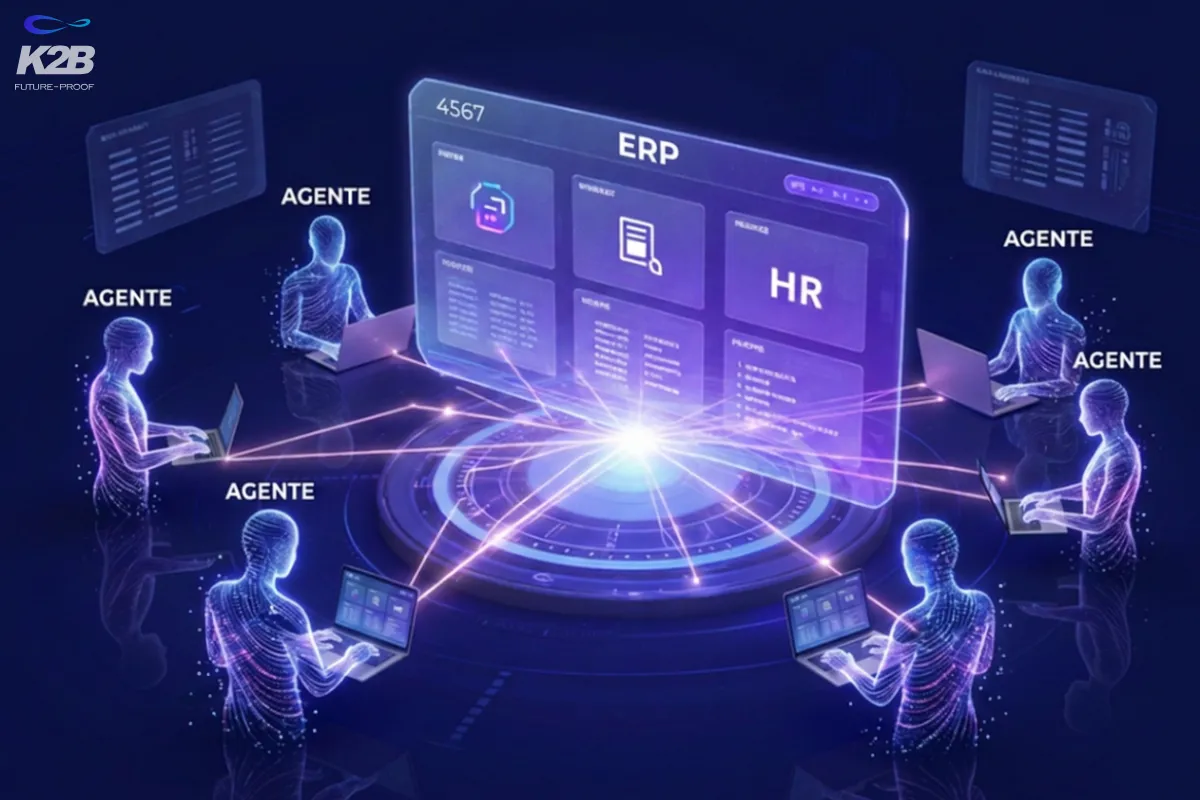
In a world where sustainability has shifted from being a choice to becoming a social, corporate, and regulatory imperative, organisations are seeking tools that enable them to measure, manage, and reduce their environmental impact effectively. In this context, ERP (Enterprise Resource Planning) systems emerge as strategic allies—not only to enhance operational efficiency but also to embed sustainability into the day-to-day management of the business.
From resource traceability to emissions monitoring, an environmentally focused ERP transforms scattered data into responsible decisions. In this article, we explore how modern ERP solutions like K2B ERP can support companies in adopting a more sustainable organisational culture and measuring their ecological footprint with accuracy.
Why Integrate Sustainability and ERP?
Corporate sustainability is no longer limited to CSR campaigns or symbolic annual reports. Consumers, investors, and regulators increasingly demand concrete evidence of environmental commitment from organisations. And to respond to this challenge in a scalable and reliable manner, digitalisation is key.
A sustainability-focused ERP helps centralise critical data on energy consumption, resource usage, waste generation, and carbon emissions. By automating the collection and analysis of this information, businesses can:
-
Comply with local and international environmental regulations.
-
Identify opportunities to reduce costs and waste.
-
Enhance corporate reputation and attract ESG-minded (Environmental, Social, Governance) investors.
-
Foster a culture of continuous improvement based on real data.

Key ERP Features for Environmental Management
Below are some of the functionalities that enable an ERP like K2B ERP to actively contribute to corporate sustainability:
1. Environmental KPI Monitoring
The system allows the definition of environmental key performance indicators (EKPIs), such as:
-
CO₂ emissions per unit produced
-
Energy consumption by operational area
-
Water usage and consumption of other natural resources
-
Recycling rate of materials or by-products
These indicators can be monitored in real time, generating alerts for deviations and supporting historical analysis for strategic decision-making.
2. Carbon Footprint Control and Material Traceability
Thanks to ERP-enabled traceability, it is possible to map the entire life cycle of products and processes—from raw material procurement to final delivery. This allows for accurate carbon footprint calculation and impact assessment across the value chain.
Moreover, K2B ERP can integrate with external tools or IoT sensors to capture data directly from machinery, HVAC systems, or electrical networks, thus enriching data quality.
3. Waste Management and Circular Economy
A modern ERP allows the registration, classification, and analysis of waste generated by operations—whether solid, liquid, or gaseous. This visibility supports the implementation of circular economy, reuse, and recycling policies.
Automated approval workflows and tracking can even be set up for the proper disposal of hazardous waste, ensuring regulatory compliance.
4. Energy Planning and Resource Optimisation
Integrating energy management into operational planning is another advantage of ERPs like K2B. Businesses can forecast consumption based on expected production and generate alerts in case of deviations, encouraging more efficient energy use.
It also supports the optimisation of raw material usage by reducing waste and adjusting supplier orders based on projected inventory and consumption levels.

Real-World Sustainability with ERP
Manufacturing Sector
A manufacturing firm implemented a sustainability module in its ERP to monitor water usage in its industrial dyeing processes. Within six months, it achieved a 20% reduction in consumption through historical data analysis and the automation of smart valves.
Retail Sector
A supermarket chain integrated energy efficiency indicators into its ERP to evaluate the performance of its refrigeration and lighting systems. This led to strategic investments that reduced electricity bills by 15%.
Local Government
A municipal council used its ERP system to measure carbon emissions from its public vehicle fleet, enabling the design of a data-driven renewal plan that included electric vehicles.
How to Choose a Sustainability-Focused ERP
To ensure that the ERP truly supports sustainability goals, it must meet specific requirements:
-
Ability to configure and customise EKPIs
-
Integration with environmental monitoring platforms or IoT devices
-
Predictive analytics and automated reporting functionalities
-
Compliance with standards such as ISO 14001 or the GRI (Global Reporting Initiative)
-
Scalable architecture adaptable to future regulations or internal initiatives
K2B ERP, for example, enables organisations to measure, audit, and improve their environmental performance through dedicated sustainability tools. Its modular approach and experience across both public and private sectors make it an ideal partner for those looking to manage impact without compromising on efficiency or competitiveness.
Smart Sustainability: Real Change Starts with Real Data
Sustainability is not just about good intentions—it’s about measurable outcomes and concrete actions. To achieve this, businesses need tools that turn ecological vision into efficient processes and informed decisions.
An ERP like K2B can transform the way your organisation measures its environmental impact and how it fulfils its climate commitments. Sustainability should no longer be an afterthought—it must be embedded at the very core of business management.
Ready to take the next step towards more sustainable operations?
Request a free demo of K2B ERP and start measuring your environmental impact with precision.
Transform your operations with technology that protects the planet.

Frequently Asked Questions (FAQ)
What is a sustainability-focused ERP?
It is a business management system that includes features for measuring and controlling environmental indicators such as energy use, carbon emissions, or waste generation, helping companies operate more responsibly.
How can an ERP reduce environmental impact?
By automating processes, optimising resource use, and offering real-time visibility into energy and material consumption, an ERP identifies areas for improvement and helps reduce waste, usage, and emissions.
Which types of companies can benefit from a green ERP?
Any organisation wishing to integrate sustainability into its daily operations—from manufacturing firms and local governments to retail, healthcare, or construction sectors.
Does K2B ERP include sustainability modules?
Yes. K2B ERP offers tools to configure environmental KPIs, generate sustainability reports, integrate IoT sensors, and comply with standards such as ISO 14001, all tailored to each organisation’s needs.
Others news you might be interested in