
Tax collection is an activity that has accompanied societies since time immemorial. Although the ways of taxing have evolved, the purpose remains the same: to finance the needs of the state. Today, tax agencies face the challenge of adapting to a world rapidly moving towards digitalization. In this context, the tax management module of K2B GRP presents itself as a comprehensive solution to modernize and optimize tax management.
Current Challenges in Tax Management
Traditional tax management faces multiple challenges. Among them are fragmentation in management by tax, lack of a comprehensive view of the taxpayer, reliance on paper for communication and data updating, difficulty in offering accessible payment options to taxpayers, and effectively managing debtors. These problems result in a poor experience for both citizens and agencies, which must deal with outdated data and poorly integrated systems.
Towards Process-Based Management
The solution to these challenges lies in transitioning from tax-based management to process-based management, focused on the citizen taxpayer. This involves adopting a digital mindset, reducing paper use, and transforming data management to leverage the vast amount of available information. The tax management module of K2B GRP is specifically designed to facilitate this transition.
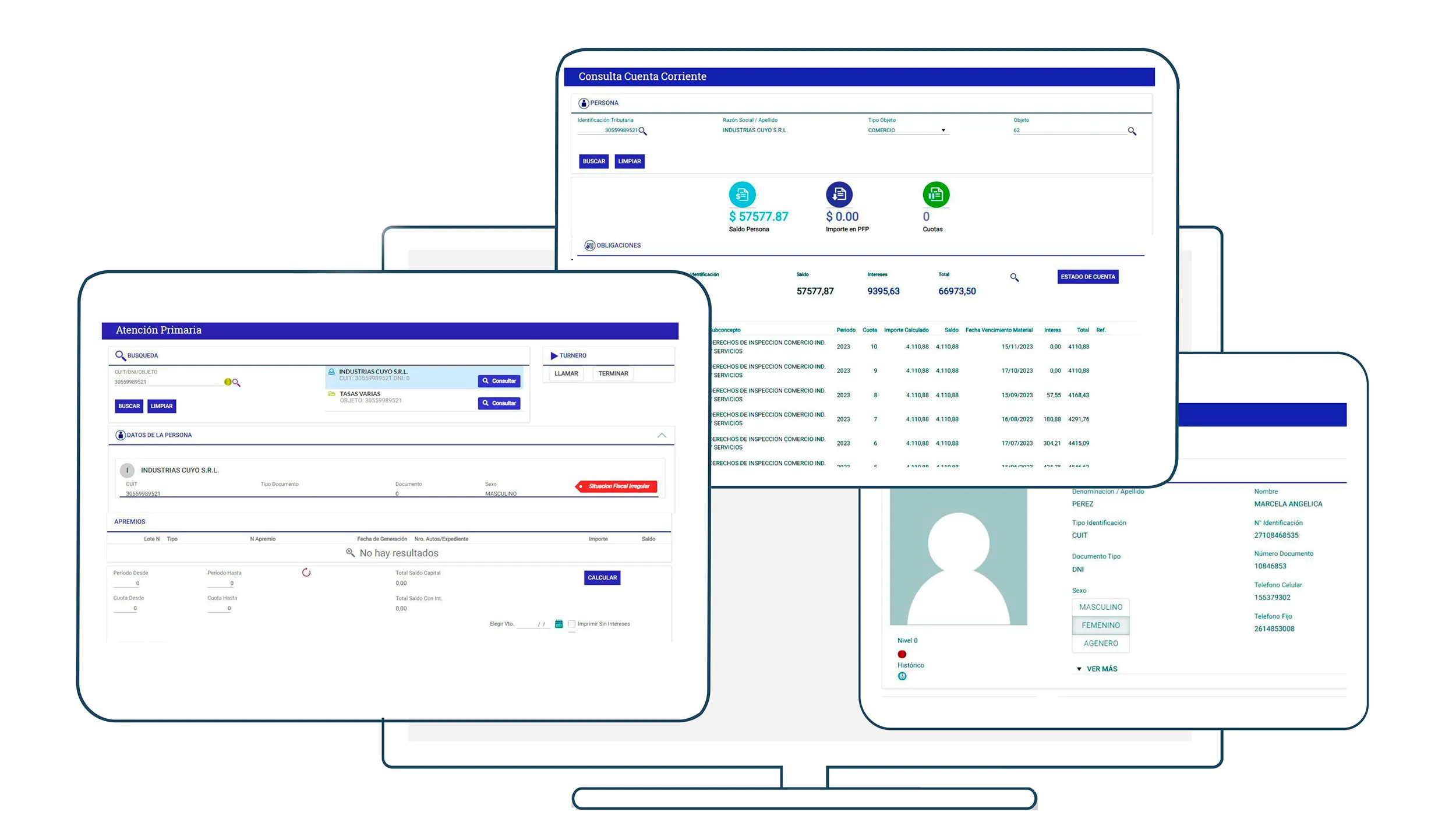
Features of the K2B GRP Tax Management Module
The tax management module of K2B GRP offers a comprehensive solution that allows tax agencies to:
– Centralize Taxpayer Information: Through a unique identifier, it is possible to access all relevant information about a citizen’s taxes, fees, and duties.
– Simplify Tax Settlement Processes: Through highly customizable
– Facilitate Compliance with Obligations: Offers multiple channels for taxpayer service, including virtual assistance and the ability to send receipts and notifications digitally.
– Optimize Data Management: Integrates georeferenced data and allows validation of contact information, ensuring data is accurate and up-to-date.
– Automate Collection Processes: Integrates payment gateways and automatic debit systems, facilitating timely and proper collection.
– Proactively Manage Exemptions and Exonerations: Allows handling of exemptions based on the characteristics of the taxpayer or the taxable object.
– Manage Debtors Comprehensively: Simplifies debtor management with a comprehensive view, using the most appropriate means according to each taxpayer’s profile and the most effective tools to achieve compliance or regularization, from administrative management to full judicial management.
– Offer Payment Alternatives to Debtors: Facilitates the configuration and implementation of agreements or payment plans for debt regularization, with detailed monitoring and complete traceability.
– Provide Analysis Tools: Includes automated management dashboards for revenue and debt analysis, providing valuable information for decision-making.
Integration and Adaptability
The module integrates with government platforms for authentication and data retrieval, and offers a high level of integration with collecting entities through web services. This ensures that payments made by taxpayers are automatically recorded, improving efficiency and reducing errors.
Conclusion
Digital transformation in tax management is not only a necessity but an opportunity to improve efficiency and the taxpayer experience. The tax management module of K2B GRP is designed to guide tax agencies through this transition, offering a complete solution that meets present demands and prepares for future challenges. With this tool, agencies can move from doing things digitally to being truly digital, adapting to new ways of collecting and the expectations of modern citizens. For more information on how the K2B GRP tax management module can transform your organization, please feel free to contact us. We are available to conduct live demonstrations and answer any questions.
By Daniel A. Santillan, Manager at ELINPAR S.A., Strategic Partner of K2B.